
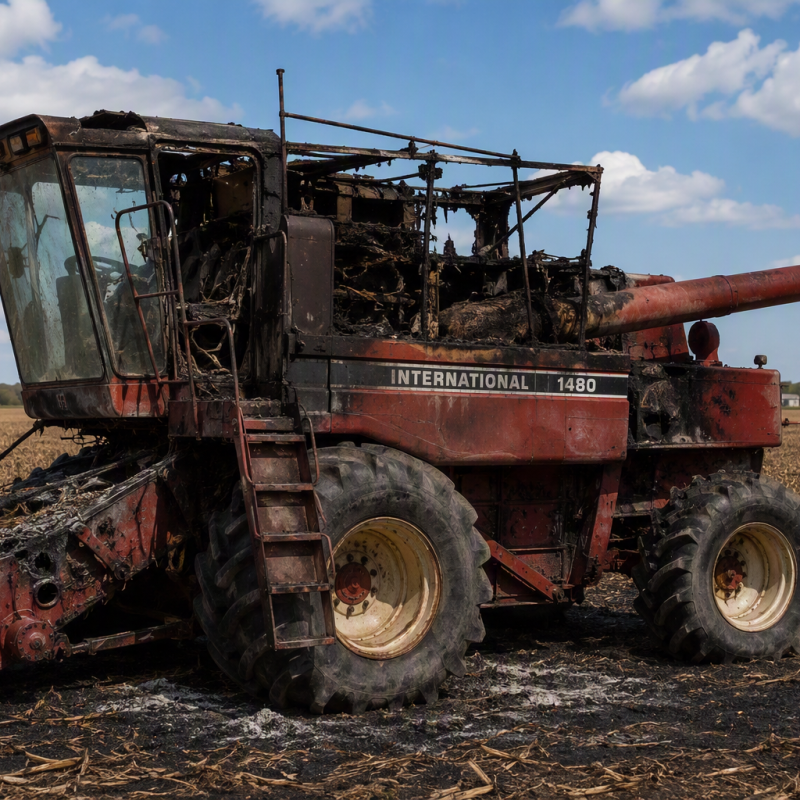
The following fire prevention recommendations are provided by Iowa State University:
Fire Prevention Checklist
- Keep equipment clean. Regularly clean around the engine and engine compartment using compressed air or a high-pressure washer to remove oil, grease, dust, and crop residue.
- Inspect air filters frequently. Clean or replace air filters as needed to help engines run cooler and more efficiently.
- Monitor fluid levels daily. Check coolant, oil levels, and inspect engine and hydrostatic pump components for signs of wear or overheating.
- Examine turbocharger oil lines. Look for worn or rubbing areas that could lead to oil leaks and create a fire hazard.
- Clean debris at the end of each day. Remove leaves, chaff, and plant material from the engine area using compressed air or a portable leaf blower. This is often easier before overnight moisture causes debris to become damp and compacted.
- Remove material from moving parts. Clear plant residue wrapped around bearings, belts, chains, and other moving components.
- Inspect hot surfaces and fuel systems. Examine exhaust systems, bearings, fuel lines, oil hoses, and fittings. Repair leaks immediately.
- Clean around fuel tanks and lines. Remove debris from ledges, recesses, and areas near fuel tanks and fuel lines where material can accumulate.
- Refuel safely. Shut down the combine and wait at least 15 minutes before refueling to reduce the risk of fuel vapors igniting.
Harvest Fire Safety Tips
Even with proper maintenance, fires can still occur. Being prepared and knowing how to respond can make a significant difference.
- Prioritize safety first. If a fire starts, shut off the engine, move away from the equipment, and call 911 immediately. Only attempt to extinguish the fire if it is safe to do so. Whenever possible, fight the fire from the already burned area ("the black") and remain upwind to avoid smoke, heat, and flames.
- Act quickly and stay alert. Fires can double in size in less than a minute, and windblown embers can spread flames rapidly. Watch for additional fires that may develop nearby.
- Keep fire extinguishers readily available. It is recommended to carry two ABC-rated fire extinguishers- a 10-pound extinguisher in the cab and a 20-pound extinguisher mounted at ground level on the combine. Consider keeping additional extinguishers in field vehicles and other equipment.
- Maintain fire extinguishers. During the season, invert extinguishers periodically to prevent the chemical powder from compacting due to vibration.
- Carry basic firefighting tools. A shovel can be an effective tool for containing small fires by covering flames with dirt.
- Prepare emergency location information. Before harvest begins, create a list of 911 addresses for all field locations and ensure family members and employees can easily access it. Providing an accurate 911 address helps emergency responders locate incidents quickly, especially in remote areas where every minute matters.
By taking preventive measures and being prepared to respond quickly, farmers can significantly reduce the risk of equipment and field fires during harvest season while helping protect lives, property, and crops.
Header Image
Designer (1).png